
Exploring Inversion – A Grammar Adventure in Science and Technology

Lesson Plan: Exploring Inversion – A Grammar Adventure in Science and Technology
Level: B2–B2+
Age Group: 10th–11th graders (15–17 years old)
Duration: 2 lessons, 45 minutes each (90 minutes total)
Topic: Inversion in English Grammar – Science and Technology Context
Focus: Understanding and using inversion in formal and expressive contexts
Lesson Outcome: By the end of the lesson, students will be able to recognize and use inversion in sentences, create a short paragraph in groups on the topic "Science and Technology" using at least 4 examples of inversion, present it to the class, and provide peer feedback.
Standards: Aligned with CELTA principles (student-centered, contextualized learning, gradual progression from controlled to freer practice) and the Ukrainian NUSH curriculum for 9th–10th grades, focusing on grammatical accuracy, communicative competence, and collaborative skills.
Lesson Objectives:
- To introduce and recognize the structure and use of inversion through a video and grammar recognition activities.
- To practice inversion in controlled and semi-controlled activities, ensuring understanding of different types.
- To develop writing and speaking skills by creating and presenting a paragraph using inversion.
- To encourage collaboration and critical thinking through peer feedback.
Materials:
- Video: “Inversion” by BBC Learning English (3:30 minutes, link: https://www.youtube.com/watch?v=AzNxZGC-Hg0).
-
Handouts:
- Short text with examples of inversion (for grammar recognition).
- Matching activity (examples to rules).
- Rules handout (for additional types of inversion).
- Gap-fill activity (controlled practice).
- Sentence transformation activity (semi-controlled practice).
- Whiteboard/Smartboard for grammar rules and examples.
- Paper and pens for group writing.
Target Grammar: Inversion
Key Structures:
-
Auxiliary verb/modal + subject + main verb:
- After negative or limiting expressions (e.g., Never, Rarely, No sooner ... than): Never have I seen such a device.
- After so, such, to such a degree: So advanced is this technology that ...
- In conditionals without if (Should, Were, Had): Had we known about AI earlier ...
- After so, neither/nor, as for agreement: So do I.
- After only after, only if, not until: Only after the invention did ...
-
Main verb + subject:
- After adverbs of place: Here comes the robot!
- In direct speech with a noun subject: “It’s amazing,” said the scientist.
Lesson Stages
Lesson 1: Introduction and Controlled Practice (45 minutes)
Stage 1: Warm-Up (5 minutes)
Objective: To engage students and introduce the topic of science, technology, and grammar.
Activity:
- Start with a discussion: “What’s the most exciting invention you’ve heard about recently? How has technology changed our lives?”
- Show a picture of a futuristic robot or AI device and ask: “What do you think about this? Would you say ‘I have never seen such a robot’ or something more dramatic?”
-
Introduce the topic: “Today we’ll learn a grammar structure called inversion that makes sentences more formal and dramatic, often used in writing about science and technology!”
Rationale: This stage activates prior knowledge, sets the context of science and technology, and prepares students for the grammar focus.
Stage 2: Grammar Recognition – Short Text and Matching Activity (15 minutes)
Objective: To introduce inversion through a short text and help students recognize its rules.
Activity:
Step 1: Pre-Reading Matching Activity with Definitions
Matching Activity (Handout for Students)
Instructions: Before reading the text "The Power of Technology," match each word to its correct definition. Write the letter (a–j) next to the word.
- Transformed ______
- Witnessed ______
- Advancements ______
- Innovations ______
- Potential ______
- Game-changer ______
- Predict ______
- Unlock ______
- Incredible ______
- Challenge ______
Definitions:
a) To say what will happen in the future based on information or patterns.
b) Amazing or hard to believe, often because it’s very impressive.
c) To make someone think or work harder by giving them a difficult task or idea.
d) Something that completely changes the way things are done, often in a revolutionary way.
e) The possibility or ability to develop into something great in the future.
f) New ideas, methods, or inventions that improve the way things are done.
g) Improvements or developments, especially in science or technology.
h) Seen 或 experienced something, often something important or impressive.
i) To find or make available something that was hidden or difficult to access, like a solution.
j) Changed completely, often in a positive way, like improving something.
Keys (Answers)
- Transformed – j (Changed completely, often in a positive way, like improving something.)
- Witnessed – h (Seen or experienced something, often something important or impressive.)
- Advancements – g (Improvements or developments, especially in science or technology.)
- Innovations – f (New ideas, methods, or inventions that improve the way things are done.)
- Potential – e (The possibility or ability to develop into something great in the future.)
- Game-changer – d (Something that completely changes the way things are done, often in a revolutionary way.)
- Predict – a (To say what will happen in the future based on information or patterns.)
- Unlock – i (To find or make available something that was hidden or difficult to access, like a solution.)
- Incredible – b (Amazing or hard to believe, often because it’s very impressive.)
- Challenge – c (To make someone think or work harder by giving them a difficult task or idea.)
Step 1: Reading the Text (5 minutes)
Handout with a short text (B2+ level): Students read the text in pairs.
Text: The Power of Technology
Technology has transformed our lives in incredible ways, shaping the world we live in today. Never have I witnessed such rapid progress in science as I do in the 21st century. From smartphones that connect us instantly to artificial intelligence that can write essays or even drive cars, the advancements seem almost unbelievable. So advanced are these innovations that they often feel like magic to those who grew up without them. Imagine a world where robots assist doctors in surgeries, or where virtual reality lets you explore distant planets from your classroom – this is the reality we’re living in now!
However, these changes didn’t happen overnight. Not until the 21st century did we fully understand the true potential of artificial intelligence, which has now become a game-changer in fields like medicine, education, and entertainment. For example, AI can now predict diseases before they even show symptoms, helping doctors save lives. Had scientists known about the possibilities of quantum computing earlier, we might have solved global problems like climate change or energy shortages much sooner. Quantum computers, with their incredible speed, could one day unlock solutions that traditional computers can’t handle.
The future of technology holds even more exciting possibilities. Rarely do we stop to think about how far we’ve come, but the journey of innovation is far from over. Scientists are working on projects like self-driving cars, space travel to Mars, and even technology that can translate languages in real-time. So incredible will these inventions be that they might change the way we live, work, and communicate in ways we can’t yet imagine. Not only will technology make our lives easier, but it will also challenge us to think differently about the world. Here comes a future where technology and human creativity will work hand in hand to build a better tomorrow. What role will you play in this technological revolution?
Instructions: Read the text and answer the questions below.
-
Comprehension Questions:
a) What examples of modern technology are mentioned in the text? (Answer: Smartphones, artificial intelligence, robots in surgeries, virtual reality, quantum computers, self-driving cars, space travel, real-time language translation.)
b) How has artificial intelligence changed the field of medicine? (Answer: AI can predict diseases before symptoms appear, helping doctors save lives.)
c) What global problems could quantum computers potentially solve? (Answer: Climate change and energy shortages.) -
Grammar Focus (Inversion):
a) What do you notice about the word order in the bold sentences? Is it normal or unusual? (Expected answer: It’s unusual – the verb comes before the subject!)
b) Find three examples of inversion in the text and write them down. (Example answers: Never have I witnessed, So advanced are these innovations, Not until the 21st century did we fully understand.)
c) Why do you think the author used inversion in these sentences? (Expected answer: To make the sentences more formal, dramatic, and to emphasize the ideas, like the speed of progress or the importance of technology.) -
Critical Thinking and Discussion:
a) How has technology changed your life? Give an example.
b) What future invention are you most excited about? Why?
c) Do you agree with the author that technology will challenge us to think differently? Why or why not?
Instructions: Reread the text and underline the examples of inversion.
-
Step 2: Matching Examples to Rules (5 minutes)
-
Handout for matching activity: Students match the examples from the text to the correct rule.
Instructions: Match each sentence with the correct rule for inversion. Write the letter (a–d) next to the sentence.- Never have I witnessed such rapid progress in science as I do today. ______
- So advanced are these innovations that they seem like magic. ______
- Not until the 21st century did we fully understand the potential of AI. ______
- Had scientists known about quantum computing earlier ... ______
-
Handout for matching activity: Students match the examples from the text to the correct rule.
Rules:
a) Used in conditionals without if with had, were, or should.
b) Used after negative or limiting expressions like never, rarely, seldom.
c) Used after so, such, or to such a degree in result clauses.
d) Used after expressions like only after, only if, not until.
Keys (Answers):
- Never have I witnessed – b (Used after negative or limiting expressions like never, rarely, seldom.)
- So advanced are these innovations – c (Used after so, such, or to such a degree in result clauses.)
- Not until the 21st century did we fully understand – d (Used after expressions like only after, only if, not until.)
- Had scientists known – a (Used in conditionals without if with had, were, or should.)
-
Step 3: Discussion (5 minutes)
- Check answers as a class: “Why did we use inversion in ‘Never have I witnessed’? What effect does it have?” (Answer: “It’s after a negative word ‘never’ and makes the sentence more formal and dramatic.”)
-
Add: “These structures are often used in formal writing, like essays about science, to make your ideas sound stronger!”
Rationale: The text introduces inversion in a motivating context (science and technology), and the matching activity helps students connect examples to rules, building their understanding of the structure.
Stage 3: Listening and Additional Rules (10 minutes)
Objective: To introduce additional types of inversion through the video and a matching activity.
Activity:
-
Step 1: Pre-listening (2 minutes)
- Say: “We’ve seen some types of inversion, but there are more! Let’s watch a video to learn about them.”
- Write on the board: Here comes the robot! and “It’s amazing,” said the scientist. Ask: “What’s unusual about these sentences?” (Answer: “The verb comes before the subject again!”)
-
Step 2: Listening (5 minutes)
- Play the video “Inversion” by BBC Learning English (3:30 minutes).
- Give a task: “Listen and write down 2 examples of inversion you hear.” (Examples from the video might include: Rarely do we see such progress or So do I.)
- Check answers: “What examples did you hear? Let’s look at some new types of inversion.”
Step 3: Matching Examples to Rules (5 minutes)
Objective: To help students connect examples of inversion from the text to the correct grammatical rules.
Activity:
- Handout for matching activity: Students match the examples of inversion from the text to the correct rule.
Instructions: Match each sentence with the correct rule for inversion. Write the letter (a–f) next to the sentence.
- Never have I witnessed such rapid progress in science as I do in the 21st century. ______
- So advanced are these innovations that they often feel like magic. ______
- Not until the 21st century did we fully understand the true potential of artificial intelligence. ______
- Had scientists known about the possibilities of quantum computing earlier, we might have solved global problems by now. ______
- Rarely do we stop to think about how far we’ve come. ______
- So incredible will these inventions be that they might change the way we live, work, and communicate. ______
- Here comes a future where technology and human creativity will work hand in hand. ______
Rules:
a) Used in conditionals without if with had, were, or should.
b) Used after negative or limiting expressions like never, rarely, seldom.
c) Used after so, such, or to such a degree in result clauses.
d) Used after expressions like only after, only if, not until, not only.
e) Used after adverbs of place like here, there, away.
f) Used after not only … but also to emphasize two ideas.
Keys (Answers):
- Never have I witnessed – b (Used after negative or limiting expressions like never, rarely, seldom.)
- So advanced are these innovations – c (Used after so, such, or to such a degree in result clauses.)
- Not until the 21st century did we fully understand – d (Used after expressions like only after, only if, not until.)
- Had scientists known – a (Used in conditionals without if with had, were, or should.)
- Rarely do we stop – b (Used after negative or limiting expressions like never, rarely, seldom.)
- So incredible will these inventions be – c (Used after so, such, or to such a degree in result clauses.)
- Here comes a future – e (Used after adverbs of place like here, there, away.)
- Rationale: The video provides authentic input, and the matching activity introduces new types of inversion in an accessible way, ensuring students understand the full range of structures.
Stage 4: Controlled Practice – Gap-Fill Activity (10 minutes)
Objective: To practice forming sentences with inversion in a controlled way.
Activity:
Gap-Fill Activity (Handout for Students)
Instructions: Work in pairs to fill in the blanks with the correct form of the verb in brackets, using inversion. Look at the word in parentheses to decide which type of inversion to use.
- __________ (I/see) such an advanced robot before! It’s incredible. (Never)
- __________ (we/start) the project than the computer crashed. (No sooner)
- __________ (the invention/be) so revolutionary that it changed the world. (So)
- __________ (we/know) about the risks, we would have stopped the experiment. (Had)
- __________ (the scientist/arrive) with the new equipment! Let’s start the test. (Here)
- __________ (students/work) so hard that they finished the AI project in one week. (So)
- __________ (I/visit) a space museum as exciting as this one. (Rarely)
- __________ (the team/understand) the importance of the discovery until they saw the results. (Not until)
- __________ (technology/help) us, but it will also inspire new ideas for the future. (Not only)
- __________ (the robot/run) after the experiment failed! We need to fix it. (Away)
Keys (Answers)
-
Never have I seen such an advanced robot before! It’s incredible.
- (Never – negative expression, inversion with have I seen.)
-
No sooner had we started the project than the computer crashed.
- (No sooner … than – negative expression, inversion with had we started.)
-
So revolutionary was the invention that it changed the world.
- (So – result clause, inversion with was the invention.)
-
Had we known about the risks, we would have stopped the experiment.
- (Had – conditional without if, inversion with had we known.)
-
Here arrives the scientist with the new equipment! Let’s start the test.
- (Here – adverb of place, inversion with arrives the scientist.)
-
So hard did students work that they finished the AI project in one week.
- (So – result clause, inversion with did students work.)
-
Rarely have I visited a space museum as exciting as this one.
- (Rarely – negative expression, inversion with have I visited.)
-
Not until the team saw the results did they understand the importance of the discovery.
- (Not until – delayed action, inversion with did they understand in the main clause.)
-
Not only will technology help us, but it will also inspire new ideas for the future.
- (Not only … but also – emphasizing two ideas, inversion with will technology help.)
- Away ran the robot after the experiment failed! We need to fix it.
- (Away – adverb of place, inversion with ran the robot.)
-
Follow-up: Check answers as a class: “Why did we use ‘had we started’ in sentence 2?” (Answer: “Because of ‘no sooner ... than’ – it’s a negative expression.”)
Rationale: This controlled practice helps students apply the rules of inversion in a structured way, building confidence before freer activities.
Stage 5: Wrap-Up (5 minutes)
Objective: To consolidate learning and prepare for the next lesson.
Activity:
- Ask: “What types of inversion did we learn today? When might you use inversion in your writing?”
-
Say: “Next lesson, we’ll practice more and write a paragraph about science and technology using inversion!”
Rationale: This stage reinforces the day’s learning and sets expectations for the next lesson.
Lesson 2: Semi-Controlled Practice and Freer Production (45 minutes)
Stage 1: Warm-Up (5 minutes)
Objective: To review inversion and prepare for practice.
Activity:
- Quick review: “What does inversion mean? Can you give an example?” (Expected answer: “It’s when the verb comes before the subject, like Never have I seen.”)
-
Show a sentence: So amazing is this invention that ... Ask: “What rule is this?” (Answer: “After so in a result clause.”)
Rationale: This stage refreshes the grammar rules and sets a positive tone for the lesson.
Stage 2: Semi-Controlled Practice – Sentence Transformation (10 minutes)
Objective: To practice transforming sentences using inversion.
Activity:
Sentence Transformation Activity (Handout for Students)
Instructions: Work in pairs to rewrite the sentences using inversion. Use the same meaning but change the word order to include inversion.
- I have rarely seen such a fast computer. → __________
- If I had known about the new technology, I would have bought it. → __________
- “I don’t understand this code,” said the programmer. → __________
- The results were only revealed after the experiment ended. → __________
- The invention was so amazing that everyone talked about it. → __________
- I didn’t realize the importance of AI until I studied it at school. → __________
- The robot runs away every time we test it! → __________
- I have never tried virtual reality before. → __________
- If we were to invest in space travel, we could explore Mars sooner. → __________
- Technology will not only improve education, but it will also make learning fun. → __________
Keys (Answers)
-
I have rarely seen such a fast computer. → Rarely have I seen such a fast computer.
- (Rarely – negative expression, inversion with have I seen.)
-
If I had known about the new technology, I would have bought it. → Had I known about the new technology, I would have bought it.
- (Had – conditional without if, inversion with had I known.)
-
“I don’t understand this code,” said the programmer. → “I don’t understand this code,” said the programmer.
- (Already uses inversion – verb said before subject the programmer in direct speech.)
-
The results were only revealed after the experiment ended. → Not until the experiment ended were the results revealed.
- (Not until – delayed action, inversion with were the results revealed in the main clause.)
-
The invention was so amazing that everyone talked about it. → So amazing was the invention that everyone talked about it.
- (So – result clause, inversion with was the invention.)
-
I didn’t realize the importance of AI until I studied it at school. → Not until I studied it at school did I realize the importance of AI.
- (Not until – delayed action, inversion with did I realize in the main clause.)
-
The robot runs away every time we test it! → Away runs the robot every time we test it!
- (Away – adverb of place, inversion with runs the robot.)
-
I have never tried virtual reality before. → Never have I tried virtual reality before.
- (Never – negative expression, inversion with have I tried.)
-
If we were to invest in space travel, we could explore Mars sooner. → Were we to invest in space travel, we could explore Mars sooner.
- (Were – conditional without if, inversion with were we to invest.)
- Technology will not only improve education, but it will also make learning fun. → Not only will technology improve education, but it will also make learning fun.
- (Not only … but also – emphasizing two ideas, inversion with will technology improve.)
-
Follow-up: Check answers in pairs, then as a class: “Why did we use ‘had I known’ in sentence 2?” (Answer: “It’s a Type 3 conditional without if.”)
Rationale: This semi-controlled practice allows students to manipulate sentences with inversion, preparing them for freer production.
Stage 3: Freer Practice – Writing a Paragraph in Groups (15 minutes)
Objective: To use inversion creatively in a paragraph about science and technology.
Activity:
- Group setup: Divide students into groups of 3–4. Each group will write a short paragraph (5–6 sentences) on the topic “Science and Technology,” using at least 4 examples of inversion.
-
Instructions:
- Write a paragraph about how science and technology have changed the world.
- Use at least 4 examples of inversion (e.g., Never have I seen, So advanced is, Had we known, Here comes).
- Be ready to present your paragraph to the class.
-
Example paragraph (for teacher to model):
Science and technology have shaped our world in amazing ways. Never have I imagined a world where robots can think like humans. So advanced are these machines that they can even drive cars! Not until the invention of the internet did we truly connect globally. Had scientists known about climate change earlier, we might have acted sooner. Here comes the future with even more exciting discoveries! -
Support: While students write, the teacher walks around, helping with grammar and ideas: “Great use of ‘So advanced are’! Can you add another inversion, like ‘Never have I’?”
Rationale: This stage encourages creativity and collaboration, allowing students to apply inversion in a meaningful context related to science and technology.
Stage 4: Presentations and Peer Feedback (10 minutes)
Objective: To develop speaking skills through presenting paragraphs and practice giving constructive feedback.
Activity:
- Presentations: Each group reads their paragraph to the class (1–2 minutes per group). Encourage expressive reading: “Make it dramatic – inversion sounds formal and strong!”
-
Peer feedback: After each presentation, other groups give feedback:
- One thing they liked: “I loved how you used ‘Had we known’ – it sounded so formal!”
- One suggestion: “Maybe you could add one more inversion to make it even stronger.”
-
Teacher’s role: Monitor the presentations, note good use of inversion, and provide positive reinforcement: “Fantastic use of ‘Not until’ – it really fits the topic!”
Rationale: Presenting paragraphs builds speaking confidence, while peer feedback fosters collaboration and critical thinking, aligning with CELTA and NUSH standards.
Stage 5: Reflection (5 minutes)
Objective: To reflect on learning and consolidate the use of inversion.
Activity:
- Ask: “What did you learn about inversion today? Did you enjoy writing about science and technology? What did you like about your classmates’ paragraphs?”
- Students share: “I learned that inversion makes sentences more dramatic! I liked how my classmates used ‘So advanced is’ in their paragraph.”
-
End with a challenge: “Try using inversion in your next essay or story – it will make your writing stand out!”
Rationale: Reflection helps students consolidate their learning, builds a sense of achievement, and encourages real-life application of grammar.
Homework (Optional)
Write a short paragraph (5–6 sentences) about a future invention you’d like to see, using at least 2 examples of inversion. Example: Never have I dreamed of a flying car until now. So incredible would it be that ...
Опис уроку (українською мовою)
Назва: "Exploring Inversion – A Grammar Adventure in Science and Technology"
Опис:
Цей урок граматики для учнів 9–10 класів (рівень B2–B2+) триває 2 заняття по 45 хвилин і присвячений темі інверсії в англійській мові. Учні вивчають різні типи інверсії через перегляд відео від BBC Learning English, читання тексту про науку та технології, matching activities та контрольовану практику (gap-fill, sentence transformation). Урок завершується творчим завданням: учні в групах пишуть абзац на тему "Наука і технічний прогрес", використовуючи щонайменше 4 приклади інверсії, презентують його класу та дають зворотний зв’язок однокласникам. Урок мотивуючий, із позитивною подачею, адаптований до вікових особливостей учнів, із фокусом на темі технологій, що їх цікавить.
Мета уроку:
Розвинути граматичні навички через вивчення інверсії, а також покращити навички письма, говоріння та співпраці через створення тексту та презентацію.
Відповідність стандартам:
Урок відповідає стандартам CELTA (фокус на учнях, поступове введення матеріалу, значуща практика) та програмі НУШ для 9–10 класів, де передбачено розвиток граматичної компетентності, творчого мислення та комунікативних навичок.
Чому підходить для школи:
Урок захоплює учнів темою науки та технологій, інтерактивними завданнями (відео, matching, gap-fill) та творчою діяльністю (написання тексту). Він розвиває граматичну точність, навички письма, говоріння та співпраці, що відповідає цілям НУШ.
**
Використано 7 прикладів інверсії: Never have I witnessed, So advanced are these innovations, Not until the 21st century did we fully understand, Had scientists known, Rarely do we stop, So incredible will these inventions be, Here comes a future.
-
Transformed
- Переклад українською: Трансформувати, змінити
- Визначення англійською: Changed completely, often in a positive way, like improving something.
-
Witnessed
- Переклад українською: Бути свідком, бачити
- Визначення англійською: Seen or experienced something, often something important or impressive.
-
Advancements
- Переклад українською: Прогрес, досягнення
- Визначення англійською: Improvements or developments, especially in science or technology.
-
Innovations
- Переклад українською: Інновації
- Визначення англійською: New ideas, methods, or inventions that improve the way things are done.
-
Potential
- Переклад українською: Потенціал
- Визначення англійською: The possibility or ability to develop into something great in the future.
-
Game-changer
- Переклад українською: Те, що змінює правила гри
- Визначення англійською: Something that completely changes the way things are done, often in a revolutionary way.
-
Predict
- Переклад українською: Передбачати
- Визначення англійською: To say what will happen in the future based on information or patterns.
-
Unlock
- Переклад українською: Розблокувати, відкрити
- Визначення англійською: To find or make available something that was hidden or difficult to access, like a solution.
-
Incredible
- Переклад українською: Неймовірний
- Визначення англійською: Amazing or hard to believe, often because it’s very impressive.
-
Challenge
- Переклад українською: Кинути виклик, змусити задуматися
- Визначення англійською: To make someone think or work harder by giving them a difficult task or idea.

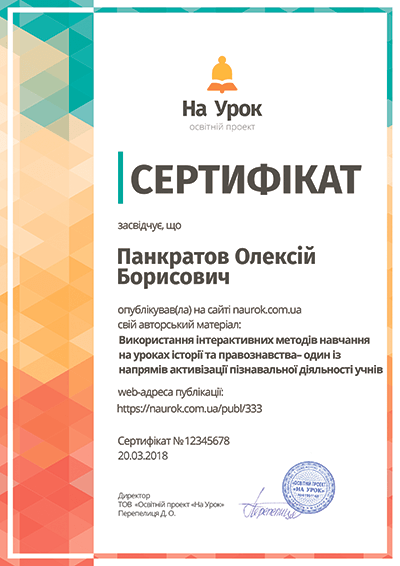
про публікацію авторської розробки
Додати розробку