My cousin ... a dresss,which she ... last week at the market.
bought....had seen
had bought...saw
bought....had saw
had bought...seen

My cousin ... a dresss,which she ... last week at the market.
bought....had seen
had bought...saw
bought....had saw
had bought...seen
He .. a book which he ... last week.
found...lost
had fouhd...lost
had find...lost
found...had lost
I've ... seen this film. Let's choose a different one.
just
already
never
I ... that film, so I don`t want to see it again.
have never seen
has already seen
`ve already seen
Children haven`t finished their test ... .
yet
just
already
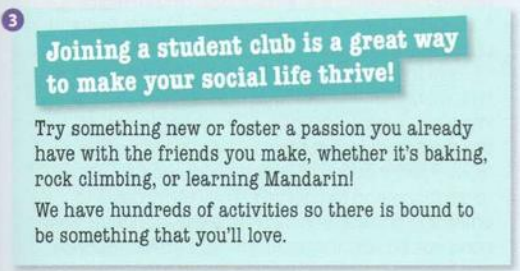
What does this advertisement describe?
a student's exchange trip
a meeting with a psychologist
changing courses
why doing degree is a good idea
a language course
a way to meet people
a relaxation technique
the advantages of a part-time course
What does this advertisement describe?
a student's exchange trip
a meeting with a psychologist
changing courses
why doing degree is a good idea
a language course
a way to meet people
a relaxation technique
the advantages of a part-time course
What does this advertisement describe?
a student's exchange trip
a meeting with a psychologist
changing courses
why doing degree is a good idea
a language course
a way to meet people
a relaxation technique
the advantages of a part-time course
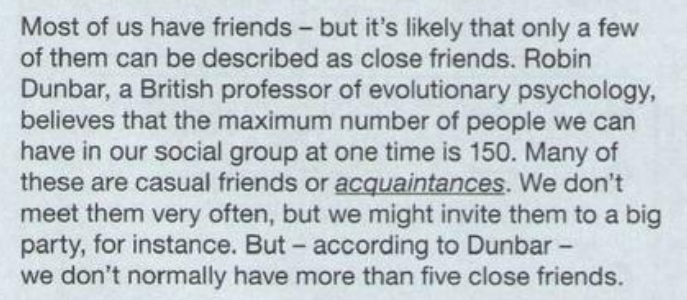
What does the word acquaintances in paragraph 3 mean?
Most of us have friends - but it's likely that only a few of them can be described as close friends. Robin Dunbar, a British professor of evolutionary psychology, believes that the maximum number of people we can have in our social group at one time is 150. Many of these are casual friends or acquaintances. We don't meet them very often, but we might invite them to a big party, for instance. But - according to Dunbar -
we don't normally have more than five close friends.
people you do not know well
people you are related to
people you are very close to
people you work with
What should a true friend do according to the text?
So who is a best friend? It is someone who's there for you when you're feeling miserable - to give you advice when you want it and to just listen when you need someone to talk to. It might be someone you have known all your life, or someone you've recently met.
It might be someone you only see once a year, but when you do get together it feels like you saw him or her only last week. But can you have a best friend of the opposite sex? In theory, the answer should be yes, but in practice, things can get complicated!
Hide your secrets from other people.
Always be ready to give you advice.
Be there to help you whenever you feel miserable.
Enjoy the same kind of music as you
According to the text, what is NOT TRUE about a best friend?
So who is a best friend? It is someone who's there for you when you're feeling miserable - to give you advice when you want it and to just listen when you need someone to talk to. It might be someone you have known all your life, or someone you've recently met.
It might be someone you only see once a year, but when you do get together it feels like you saw him or her only last week. But can you have a best friend of the opposite sex? In theory, the answer should be yes, but in practice, things can get complicated!
You might have known them for a long time
It isn't important to have grown up with them
It's essential that you see them frequently.
You don't need to see them regularly.
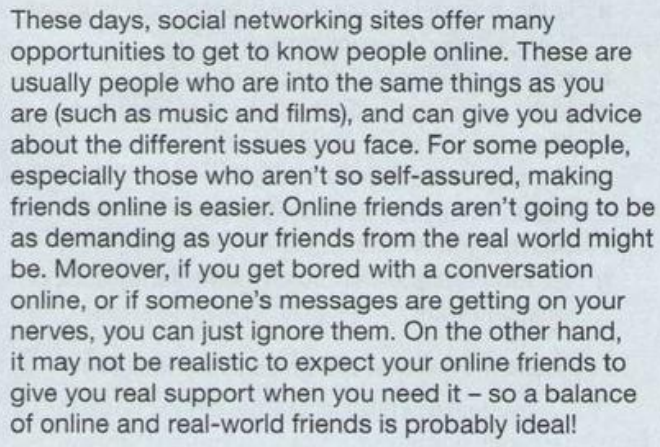
What does the author say about online friends?
These days, social networking sites offer many opportunities to get to know people online. These are usually people who are into the same things as you are (such as music and films), and can give you advice about the different issues you face. For some people, especially those who aren't so self-assured, making
friends online is easier. Online friends aren't going to be as demanding as your friends from the real world might be. Moreover, If you get bored with a conversation online, or if someone's messages are getting on your nerves, you can just ignore them. On the other hand,
it may not be realistic to expect your online friends to give you real support when you need it - so a balance of online and real-world friends is probably ideal!
They are easier to make if you aren't confident.
You have to share the same hobbies with them.
They will never judge you, even if you're boring.
They are harder to ignore than friends in real life.
After Sandy ... (finish) breakfast she ... (made) some phone calls.
finished/made
had finished/made
was finishing/was making
My neighbour ... (play) tennis for three years and then he ... (give) it up
played/gave
was playing/gave
had been playing/gave
... the students ... the test by the end of the lesson?
Did...complete
Did...completed
Had...completed
When Bob ... the student's book, he... that he ... that exercise.
opened, understood, did
opened, understood, had done
had opened, had understood, did
She ... to school every day.
go
goes
went
gone
It ... when I woke up this morning.
rained
was raining
rains
I haven't seen John ... last July.
never
since
for
recently
I ... a science fiction story at 10:00 pm.
read
was reading
were reading
reads
Karen ………………(sit) in front of the TV when the power ………(go) off.
was sitting .........went
sat...... was going
sat.....went
The History of Chupa Chups Lollipops
The Chupa Chups company started as an idea of a Spanish citizen named Enric Bernat in 1958. Mr. Bernat started his career at an apple jam factory. He approached investors about a lollipop business but he failed to get support. He took over the company himself and built the first production machines with his own hands. He also decided that the new creation would be called Chupa Chups, after the Spanish verb chupar, which translates into to suck.
Enric Bernat knew that the bon-bons on a wooden stick would be an instant hit. Previously candy had been marketed as a luxury and kept away from children. However, he knew that if he could get the candy into the view of children he would sell many more lollipops. Five years after he first introduced the idea, Chupa Chups were being sold at over 300,000 stores across Europe.
The original Chupa Chups sales force was over 600 sales agents for 300,000 locations.
This amazing sales force sped across Europe to bring the good news and delicious taste of the Chupa Chups lollipops to the masses. Without their dedication and excitement, there would be no way the company could have grown to the massive size that it is today.
Sadly, the traditional wooden stick that was associated with Chupa Chups had to be discontinued and replaced with a plastic one due to the lack of wood available in Spain. The stick has remained plastic ever since. Chupa Chups were originally going to be called GOL but the name did not stick.
An advertising firm came up with the idea to name them Chupa and the delightful lollipops were born. Salvador Dali, the famous painter, created the new Chupa Chups logo, which remains on the wrapper on all of the lollipops to this day.
The Chupa Chups business went international beginning with Asia and Australia in the 1970’s. It soon followed to North America and the rest of Europe. The amazing results led to a high point for the company, with the production of over 4 billion Chupa Chups lollipops during the 2003 calendar year.
Which of the following is NOT TRUE according to the text?
Candies used to be an expensive treat.
The name Chupa Chups means bon-bons.
Chupa Chups originally had wooden sticks.
Bernat’s product was meant mainly for children.
The History of Chupa Chups Lollipops
The Chupa Chups company started as an idea of a Spanish citizen named Enric Bernat in 1958. Mr. Bernat started his career at an apple jam factory. He approached investors about a lollipop business but he failed to get support. He took over the company himself and built the first production machines with his own hands. He also decided that the new creation would be called Chupa Chups, after the Spanish verb chupar, which translates into to suck.
Enric Bernat knew that the bon-bons on a wooden stick would be an instant hit. Previously candy had been marketed as a luxury and kept away from children. However, he knew that if he could get the candy into the view of children he would sell many more lollipops. Five years after he first introduced the idea, Chupa Chups were being sold at over 300,000 stores across Europe.
The original Chupa Chups sales force was over 600 sales agents for 300,000 locations.
This amazing sales force sped across Europe to bring the good news and delicious taste of the Chupa Chups lollipops to the masses. Without their dedication and excitement, there would be no way the company could have grown to the massive size that it is today.
Sadly, the traditional wooden stick that was associated with Chupa Chups had to be discontinued and replaced with a plastic one due to the lack of wood available in Spain. The stick has remained plastic ever since. Chupa Chups were originally going to be called GOL but the name did not stick.
An advertising firm came up with the idea to name them Chupa and the delightful lollipops were born. Salvador Dali, the famous painter, created the new Chupa Chups logo, which remains on the wrapper on all of the lollipops to this day.
The Chupa Chups business went international beginning with Asia and Australia in the 1970’s. It soon followed to North America and the rest of Europe. The amazing results led to a high point for the company, with the production of over 4 billion Chupa Chups lollipops during the 2003 calendar year.
According to the text, what helped the company to become a big success?
The product’s unusual name
The variety of lollipop tastes
The candy’s attractive wrapping
The sales staff’s enthusiasm
The History of Chupa Chups Lollipops
The Chupa Chups company started as an idea of a Spanish citizen named Enric Bernat in 1958. Mr. Bernat started his career at an apple jam factory. He approached investors about a lollipop business but he failed to get support. He took over the company himself and built the first production machines with his own hands. He also decided that the new creation would be called Chupa Chups, after the Spanish verb chupar, which translates into to suck.
Enric Bernat knew that the bon-bons on a wooden stick would be an instant hit. Previously candy had been marketed as a luxury and kept away from children. However, he knew that if he could get the candy into the view of children he would sell many more lollipops. Five years after he first introduced the idea, Chupa Chups were being sold at over 300,000 stores across Europe.
The original Chupa Chups sales force was over 600 sales agents for 300,000 locations.
This amazing sales force sped across Europe to bring the good news and delicious taste of the Chupa Chups lollipops to the masses. Without their dedication and excitement, there would be no way the company could have grown to the massive size that it is today.
Sadly, the traditional wooden stick that was associated with Chupa Chups had to be discontinued and replaced with a plastic one due to the lack of wood available in Spain. The stick has remained plastic ever since. Chupa Chups were originally going to be called GOL but the name did not stick.
An advertising firm came up with the idea to name them Chupa and the delightful lollipops were born. Salvador Dali, the famous painter, created the new Chupa Chups logo, which remains on the wrapper on all of the lollipops to this day.
The Chupa Chups business went international beginning with Asia and Australia in the 1970’s. It soon followed to North America and the rest of Europe. The amazing results led to a high point for the company, with the production of over 4 billion Chupa Chups lollipops during the 2003 calendar year.
Where was the Chupa Chups business originally concentrated?
In Asia
In Europe
In Australia
In America
The History of Chupa Chups Lollipops
The Chupa Chups company started as an idea of a Spanish citizen named Enric Bernat in 1958. Mr. Bernat started his career at an apple jam factory. He approached investors about a lollipop business but he failed to get support. He took over the company himself and built the first production machines with his own hands. He also decided that the new creation would be called Chupa Chups, after the Spanish verb chupar, which translates into to suck.
Enric Bernat knew that the bon-bons on a wooden stick would be an instant hit. Previously candy had been marketed as a luxury and kept away from children. However, he knew that if he could get the candy into the view of children he would sell many more lollipops. Five years after he first introduced the idea, Chupa Chups were being sold at over 300,000 stores across Europe.
The original Chupa Chups sales force was over 600 sales agents for 300,000 locations.
This amazing sales force sped across Europe to bring the good news and delicious taste of the Chupa Chups lollipops to the masses. Without their dedication and excitement, there would be no way the company could have grown to the massive size that it is today.
Sadly, the traditional wooden stick that was associated with Chupa Chups had to be discontinued and replaced with a plastic one due to the lack of wood available in Spain. The stick has remained plastic ever since. Chupa Chups were originally going to be called GOL but the name did not stick.
An advertising firm came up with the idea to name them Chupa and the delightful lollipops were born. Salvador Dali, the famous painter, created the new Chupa Chups logo, which remains on the wrapper on all of the lollipops to this day.
The Chupa Chups business went international beginning with Asia and Australia in the 1970’s. It soon followed to North America and the rest of Europe. The amazing results led to a high point for the company, with the production of over 4 billion Chupa Chups lollipops during the 2003 calendar year.
What is TRUE about the Chupa Chups logo?
It was designed by a great artist.
It made the lollipop more popular.
It has changed three times by now.
It varies from country to country.
The History of Chupa Chups Lollipops
The Chupa Chups company started as an idea of a Spanish citizen named Enric Bernat in 1958. Mr. Bernat started his career at an apple jam factory. He approached investors about a lollipop business but he failed to get support. He took over the company himself and built the first production machines with his own hands. He also decided that the new creation would be called Chupa Chups, after the Spanish verb chupar, which translates into to suck.
Enric Bernat knew that the bon-bons on a wooden stick would be an instant hit. Previously candy had been marketed as a luxury and kept away from children. However, he knew that if he could get the candy into the view of children he would sell many more lollipops. Five years after he first introduced the idea, Chupa Chups were being sold at over 300,000 stores across Europe.
The original Chupa Chups sales force was over 600 sales agents for 300,000 locations.
This amazing sales force sped across Europe to bring the good news and delicious taste of the Chupa Chups lollipops to the masses. Without their dedication and excitement, there would be no way the company could have grown to the massive size that it is today.
Sadly, the traditional wooden stick that was associated with Chupa Chups had to be discontinued and replaced with a plastic one due to the lack of wood available in Spain. The stick has remained plastic ever since. Chupa Chups were originally going to be called GOL but the name did not stick.
An advertising firm came up with the idea to name them Chupa and the delightful lollipops were born. Salvador Dali, the famous painter, created the new Chupa Chups logo, which remains on the wrapper on all of the lollipops to this day.
The Chupa Chups business went international beginning with Asia and Australia in the 1970’s. It soon followed to North America and the rest of Europe. The amazing results led to a high point for the company, with the production of over 4 billion Chupa Chups lollipops during the 2003 calendar year.
Which of the following is stated in the text about Enric Bernat?
He inherited the family business.
He borrowed money from a bank.
He devoted his life to jam production.
He made the factory equipment himself.
I ... that the orange and green tic-tacs gave you special powers.
used to think
use to think
didn't use think
didn't used to think
Ann … white bread, but now she buys brown bread
didn't use to buy
didn't used to buy
use to buy
used to buy
My wife … much money on clothes, but now she spends it on travelling.
used to spent
didn't use to spend
used to spend
didn't used to spent
Choose the verb in Present Perfect or Past Simple.
My cousin ... (to bring) me a big bunch of flowers for my birthday last night.
brought
has brought
brings
bringed
Choose the verb in Present Perfect or Past Simple.
The sportsmen..........(to win) the gold medal at the last competition.
have won
won
winned
has won
Choose the verb in Present Perfect or Past Simple.
I.........(to love) ice-cream when I was a child.
has loves
has loved
loves
loved
Choose the verb in Present Perfect or Past Simple.
They........(to be) in London for six months.
have been
has been
was
were
Choose the verb in Present Perfect or Past Simple.
He...........(not to eat) lunch yet.
haven't eaten
didn't eat
didn't ate
hasn't eaten
Choose the verb in Present Perfect or Past Simple.
Students...........(to write) essays about their hobbies last week.
wrote
have written
written
writed
Choose the correct word to complete the sentence
Henry has ... been to this place before. He is here for the first time.
never
just
ever
yet
Choose the correct word to complete the sentence
My sister hasn't come ... but she phoned five minutes ago.
since
yet
already
for
never
Choose the correct word to complete the sentence
Peter has been here ... 5 o'clock.
ever
since
already
for
just
Choose the correct word to complete the sentence
They have waited for you ... a long time.
since
already
for
just
yet
Choose the correct word to complete the sentence
Have you finished your project ...?
yet
already
just
ever
since
Створюйте онлайн-тести для контролю знань і залучення учнів до активної роботи у класі та вдома
Створити тест