
Урок "Television in our life. Present Continuous Tense

Тема: Кіно та телебачення. Present Continuous.
Вид заняття: практичне
Мета:
навчальна:
- Фонетичне опрацювання нового лексичного матеріалу;
- закріпити навички вживання нового матеріалу на практиці в усному та письмовому мовленні;
- вдосконалювати вміння читання і розуміння текстів за даною темою (читання з повним розумінням);
- закріпити навички вживання та утворення Present Continuous на практиці.
розвиваюча:
- розвинути навички мовлення на рівні достатньому для здійснення
іншомовного спілкування в 4-х видах мовленнєвої діяльності:
аудіювання, читання, говоріння та написання;
виховна:
-
виховання культури спілкування прийнятої в сучасному цивілізованому
суспільстві; -
розуміння важливості оволодіння іноземною мовою і потреби
користуватися нею як засобом спілкування;
Література:
- роздатковий матеріал з завданнями для усного та письмового виконання.
Методи: повідомлення, пояснення, демонстрація, вправляння;
Матеріально – технічне забезпечення, дидактичні засоби:
роздатковий матеріал, дошка, ноутбук , проектор
Розгорнутий план заняття:
Good afternoon, dear students. I’m very glad to see you. I hope, you are well today.
So, let’s begin our lesson and first of all let’s check who is present.
Повторення попереднього матеріалу:
Ok, at the last lessons we learned about kinds of art.
1. Tell me , please, what three main categories of arts do you remember?
2. What kinds of arts are there in the category of visual art?
3.What kinds of arts are there in the category of performing art?
4. What kinds of arts are there in the category of applied art?
5.Do you name the kinds of art? Looking at the picture:


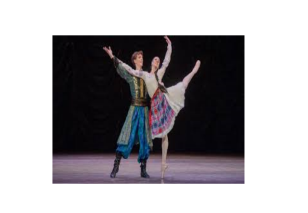
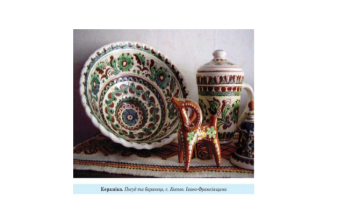
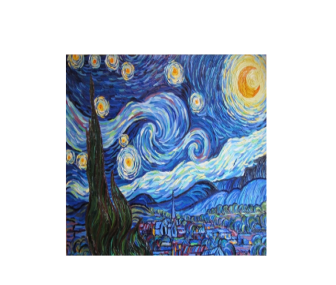
Ex.1. Дайте відповіді на запитання (усно)
- Do you like watching films?
- Is watching a film more interesting than reading a book?
- Is there a big difference watching a film on video at home and in the cinema?
- Who is your favourite actor and favourite actress? Why?
- When were you last in the cinema?
- What is your favourite genre (action films, romances, comedies, thrillers, westerns, adventure films, horror films, cartoons, science fiction films, animated films, etc.)?
- Do you prefer to watch films on TV or in the internet?
Ex.2. Прочитайте та запам’ятайте новий лексичний матеріал:(усно)
- Mass media -засоби масової інформації
- Newspapers- газети
- Magazines- журнали
- Radio (broadcasts) - рідіо
- TV (television)- телебачення
- Cinema – кіно, кінотеатр
- Програми- programs
- recognition - визнання
- heartwarming - зворушливий
- meaningless - безглуздо
- striking - яскравий
- unfavourable - несприятливі
- to blend together - зливаються воєдино
- modern society – сучасне суспільство
- leisure time – час для відпочинку
- different kinds – різні види
- feature films – художні фільми
- popular science films – науково- популярні фільми
- concert films – концертні фільми
- comedies - комедії
- documentaries – документальні фільми
- animated cartoons - мультфільми
- about real life of people – про реальне життя людей
- fantasy - фентезі
- sound - озвучені
- silent - німі
- colour pictures – кольорові фільми
- a newsreel - кіножурнал
- cinema-goers – любитель ходити в кіно
- Pros and cons - переваги та недоліки
Ех.3 Перекладіть речення, використовуючи нові лексичні одиниці:
- Я не люблю дивитися телебачення.
- Сучасне суспільство надає перевагу інтернету.
- Мої друзі часто ходять в кінотеатр.
- Моя сестра любить дивитися програми про реальне життя людей.
- Старі комедії дуже смішні.
Ex.4 Перегляньте уривок відео матеріалу та дайте відповіді на запитання:
(https://www.youtube.com/watch?v=Mizalaodfpc)
- Whаt kinds of mass media do you know?
- What two points of view of television are there?
- When people watch TV for lеisure?
- Can the TV be the source of knowledge?
- What are the cons of television?
- Does the reporter like to watch TV?
Допоміжний лексичний матеріал:
Contant - зміст
Leisure -відпочинок
News- новини
Shows -шоу
Advertisement - реклама
Source of knowledge - джерело знань
Include TV on your schedule - включити телебачення у свій розклад
Background noise - фоновий шум
No reason and rest- без причини та відпочинку
Ex.5 Прочитайте та перекладіть текст:
Television in Modern Life
How do people usually answer the question like, "What are your plans for tonight?" or "What are you doing at the weekend?" In other words, how do people spend their free time?
Some twenty or thirty years ago the usual answers used to be: "We are going to the theatre (or the cinema)" or "We are going to a party" or "We are having some friends round". Now you quite often hear, "We are going to stay at home and watch the telly or You tube"
Television is now so popular in the whole world that it is hard to believe that it appeared only about one hundred years ago.
A first-rate colour TV set has become an ordinary thing in the household today.
Modern television offers the viewers several programs on different channels. Television helps us to learn more about the world and to know and see many new things. Television can often present information to us in a more effective way than books can. It can also make things more memorable.
In addition to regular news programs, you can see plays and films, operas and ballets, and watch all kinds of contests, quizzes, soap operas, serials and sporting events. You can also get a lot of useful information on the educational channel. A good serial (perhaps, a detective story or a screen version of a classical novel) can keep the whole family in front of the telly for days, and don't we spend hours and hours watching out favourite football or hockey team in an important international event?
Television most definitely plays an important part in people's lives. But is it a good thing or a bad one?
Ex.6. Висловіть свою думку, що для вас краще: дивитися телебачення, використовувати You tube чи переглядати фільми в кінотеатрі. Аргументуйте.
Ex.7. Пригадайте правила вживання теперішнього тривалого часу (The Present Continuous Tense):
1 Для вираження дії, що відбувається в момент мовлення
e. g. - What are you doing now?
- I am reading a book
2 Для вираження тривалої дії, що відбувається в певний період цього часу ( не обов’язково в момент мовлення)
e. g. -What are you doing here in the Kyiv?
- I’m studying at the University.
3 Для вираження тривалої дії, що відбувається одночасно з іншою в теперішньому часі.
I’m happy when I am speaking English.
Для вираження запланованої дії, особливо з дієсловами руху.
To go іти, їхати
To come приходити
To fly летіти
To leave від’їжджати
To start вирушати
Та інші
e. g. We are going to village in the evening. They are flying to London next Monday
4 Для вираження наміру у виразі to Be going to + I
e. g. I am going to visit my mother. He is going to help me.
Ex.8. Поставте кожне речення в запитальній та запереченій формі: ( усно)
- You are listening to the radio.
- I am waiting for them.
- You are playing basketball now.
- He is having breakfast at the moment.
- Tom is still filling in the blank.
- The children are washing hands in the bathroom.
- They are working now.
- The children are having supper.
Ex.9. Розкрийте дужки, вживаючи дієслово в Present Continuous:
1. The cat (to sleep) on the chair.
2. Jane and Emily (to do) their homework.
3. Bill (not to wait) at the bus stop.
4. We (to listen) to the radio.
5. The children (not to play) a game.
6. Laura (to walk) the dog.
7. John and Mandy (not to clean) the kitchen.
8. I am (to read) a book at the moment.
9. We (to sing) a new song.
Додаткові завдання:
Ех.10 Розкрийте дужки, вживаючи дієслова у Present Simple або y Present Continuous (письмово)
- She (to read) at the moment.
- You (to go) to work by car?
- He (to drink) coffee in the morning.
- They (to have) breakfast now.
- Look! She (to dance).
- He (to have) breakfast every morning.
- You (to listen) to the radio now?
- We (to look) for our things now.
- He (not to watch) television at the moment.
- I (not to get up) at seven o'clock every morning.
- Don't (to make) so much noise: mother (to sleep).
- She (not to drink) coffee in the morning.
- John (read) a book now.
- What you (to do) tonight?
- Jack and Peter (to work) late today.
- Silvia (not to listen) to music.
- Maria (to sit) next to Paul.
- The phone (not to ring).
- It (to rain).
- He (to repair) his bike.
- They (not to watch) a film.
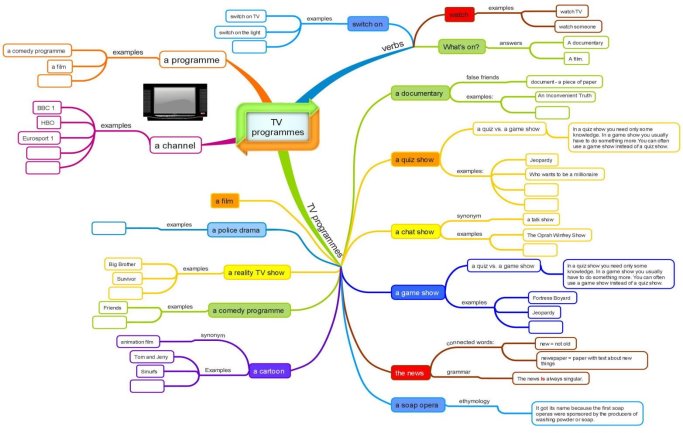
Ех.11. Ознайомтесь з таблицею прикладів видів телевізійних програм, випишіть незнайомі слова. (Додаток 1)
Ех.12. Прочитайте текст та заповніть таблицю в парі із сусідом по парті. (Додаток 1)
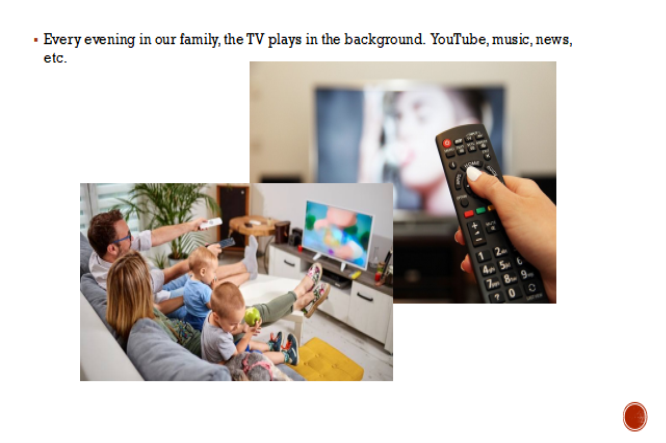
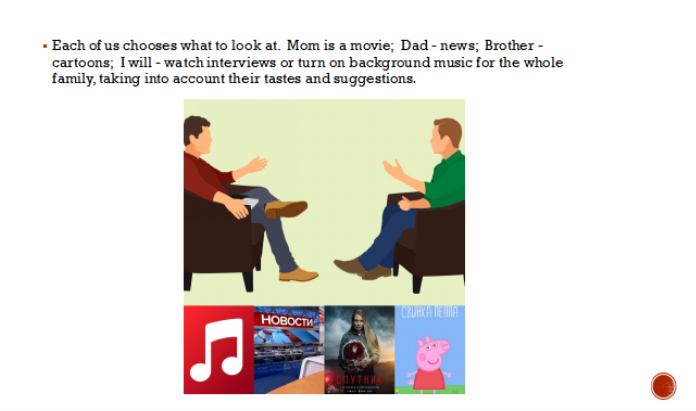
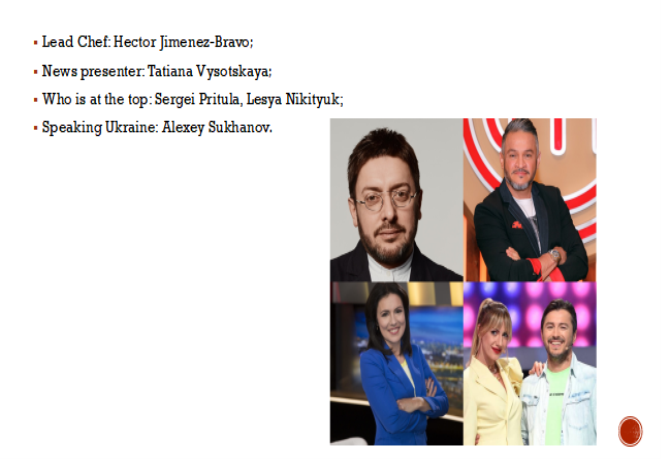
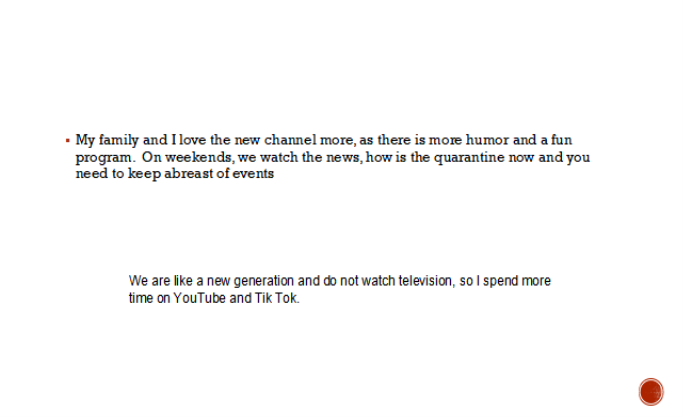
Ех.13. Перегляньте презентацію: My favorite TV channel (Додаток 2), назвіть свій улюблений канал, передачу.
Узагальнення матеріалу:
So, today we spoke about interesting topic Television. I hope, you enjoyed our lesson.
Homework
Домашнє завдання:
- Вивчить новий лексичний матеріал.
- Підготуйте презентацію про два- три телеканали, про їх історію створення, телепередачі, розкажіть про одну телепередачу більш конкретно. (18-25 слайдів)
Оцінювання студентів.
Питання дня самоконтролю:
1. Коли вживається Present Continuous?
2. Як утворюється Present Continuous?
3. Які види фільмів ви знаєте?
4. Який твій улюблений канал?
5. Який ваш улюблений фільм?
ДОДАТОК 1
Read and translate the text:
Young people in Great Britain are watching less and less news on television. This is according to Of com, a regulatory body that oversees broadcasting practices in the UK. This comes as no surprise as young people become increasingly addicted to their smartphones. Youth are opting for online distractions like YouTube videos, social media and games rather than switch on a TV and watch a news programme. Britain's Guardian newspaper reported that: "The youth of the nation are more likely to get their day's news about the world from social media or by reading graffiti in bus stations than seeing it on the telly, with the average 16-24-year-old watching just two minutes' worth of live TV news per day."
Of com commissioned research into the news-viewing habits of people around the country. The report is called "News Consumption in the UK: 2019". The research suggests that young people are increasingly using social media as their primary news source. Researchers wrote: "There is evidence that UK adults are consuming news more actively via social media." They reported an increase in posts and comments on Facebook and Twitter about the news compared to last year. Ofcom suggested presenting news stories in a less complicated, more accessible way to attract young people's attention. Some people suggested this would be "dumbing down content for young audiences".
Warm-ups
1. TV NEWS: Students walk around the class and talk to other students about TV news. Change partners often and share your findings.
2. CHAT: In pairs / groups, talk about these topics or words from the article. What will the article say about them? What can you say about these words and your life?
young people / news / broadcasting / smartphones / youth / nation / graffiti / average
research / habits / social media / news source / evidence / complicated / attention
Have a chat about the topics you liked. Change topics and partners frequently.
3. TV: Students A strongly believe TV is a better source for news than social media; Students B strongly believe social media is the best source for news. Change partners again and talk about your conversations.
4. NEWS SOURCES: What are the pros and cons of these news sources? Complete this table with your partner(s). Change partners often and share what you wrote.
|
|
Pros |
Cons |
|
TV |
|
|
|
Radio |
|
|
|
Newspapers |
|
|
|
Social media |
|
|
|
Internet |
|
|
|
Word of mouth |
|
|
ДОДАТОК 2

про публікацію авторської розробки
Додати розробку
 Зареєструватись за допомогою Google