
Діалоги про галереї в Лондоні

Dialogues
1. Tate Britain (The Home of British Art) Characters: Oliver and Sophie
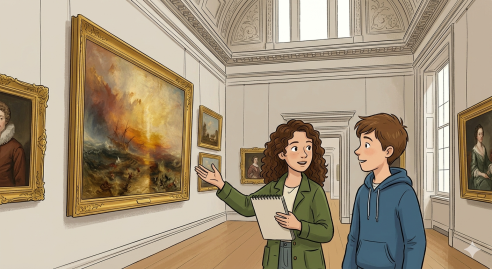
Oliver: Have you finished your art project on British history yet?
Sophie: Not yet! I’m going to Tate Britain tomorrow to get some inspiration.
Oliver: Why that specific gallery?
Sophie: Because it holds the world’s largest collection of British art from the 16th to the 21st century.
Oliver: Oh, I remember! Isn't that where the famous landscapes by J. Turner are kept?
Sophie: Exactly. If you want to see the best of British painting, that's the place to be.
2. National Portrait Gallery (Faces of History) Characters: Harry and Mia
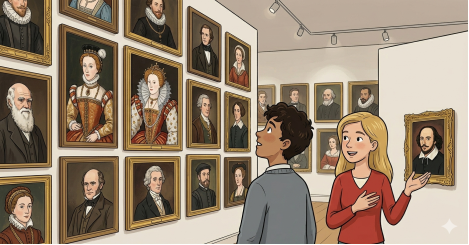
Harry: I’m tired of just reading names of kings and queens in our history books.
Mia: You should visit the National Portrait Gallery. It literally gives faces to those names.
Harry: Is it just for royalty?
Mia: No, they have portraits of poets, musicians, thinkers, and heroes from the late 14th century until today.
Harry: That sounds much more interesting than a regular textbook!
Mia: It is! Plus, they have a great shop and a new restaurant if you get hungry.
3. Somerset House (The Impressionist Gem) Characters: Jack and Daisy
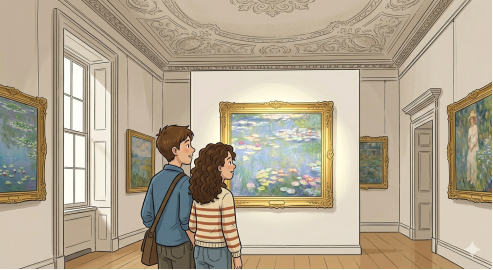
Jack: I want to see some Impressionist paintings, like those by Monet or Renoir. Where should we go?
Daisy: We should definitely visit the gallery in Somerset House.
Jack: Is it a large museum?
Daisy: It’s actually a small but spectacular gallery located in an elegant Georgian building.
Jack: What is the most popular part of their collection?
Daisy: The Impressionist and Post-Impressionist works definitely draw the most attention there.
4. National Gallery (The Giant of World Art) Characters: Charlie and Bella
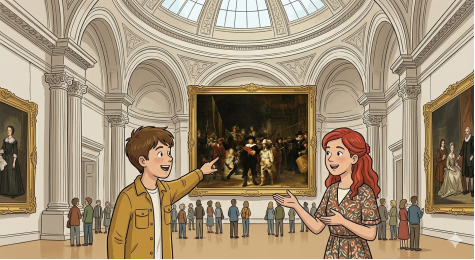
Charlie: I want to see the "big" world masters, like Leonardo da Vinci and Rembrandt.
Bella: Then we have to go to the National Gallery in Trafalgar Square.
Charlie: I heard their collection is massive. Is that true?
Bella: Yes! They have over 2,300 paintings on permanent display.
Charlie: Wow! When did they start collecting all those masterpieces?
Bella: The government bought the first 38 major paintings in 1824, and the collection has been growing ever since.
Vocabulary
1. Tate Britain (Британське мистецтво)
- Inspiration — натхнення.
- Specific — конкретний, специфічний.
- Collection — колекція.
- Landscapes — пейзажі.
2. National Portrait Gallery (Портретна галерея)
- Portrait — портрет.
- Literally — буквально.
- Royalty — королівські особи, члени королівської родини.
- Thinkers and heroes — мислителі та герої.
3. Somerset House (Імпресіонізм)
- Impressionist — імпресіоніст.
- Spectacular — видовищний, захопливий.
- Elegant Georgian building — елегантна будівля в георгіанському стилі.
- Post-Impressionist — постімпресіоніст.
4. National Gallery (Світові шедеври)
- World masters — світові майстри.
- Massive — масивний, величезний.
- Permanent display — постійна експозиція.
- Masterpieces — шедеври.


про публікацію авторської розробки
Додати розробку