
Методична розробка на тему «Structure of the body. Body Systems»

Про матеріал
1. Актуальність теми: дати поняття студентам про будову тіла та системи органів 2. Навчальні цілі заняття: - ознайомити з активною лексикою заняття; - нагадати структури простого та складного речення при перекладі; - оволодіти навичками читання та письма нової лексики, технікою виконання усних та письмових вправ. 3. Виховна ціль: виховувати інтерес до мови, яка вивчається; дисципліну, повагу один до одного та до оточуючих; працелюбність та професіоналізм.Міністерство охорони здоров’я
комунальний заклад
«Бериславський медичний фаховий коледж»
Херсонської обласної ради
МЕТОДИЧНА РОЗРОБКА
з дисципліни: «Іноземна мова за професійним спрямуванням»
на тему: ««Structure of the body. Body Systems»»
Розглянуто та схвалено на засіданні
циклової комісії викладачів гуманітарної та
соціально-економічної підготовки
Протокол № ___ від «___ » ________ 20__ року
Голова циклової комісії ______О. Запорожець
2024/2025 н.р.
Навчально-методична карта
Тема: ««Structure of the body. Body Systems»»
Курс: ІІІ, спеціальність «Лікувальна справа»
Кількість навчальних годин: 2
Місце проведення: ZOOM
- Актуальність теми: дати поняття студентам про будову тіла та системи органів
- Навчальні цілі заняття:
- ознайомити з активною лексикою заняття;
- нагадати структури простого та складного речення при перекладі;
- оволодіти навичками читання та письма нової лексики, технікою виконання усних та письмових вправ.
- Виховна ціль: виховувати інтерес до мови, яка вивчається; дисципліну, повагу один до одного та до оточуючих; працелюбність та професіоналізм.
- Міждисциплінарна інтеграція:
Дисципліни:
- Попередні (забезпечуючі) дисципліни: ВМП
Знати: Анатомія та фізіологія людини
Вміти: вести діалог
- Наступні дисципліни (що забезпечуються): Внутрішня медицина
Знати: лексичний матеріал
Вміти: застосовувати медичну термінологію в писемному та усному мовленні
- Внутрішньопредметна інтеграція (теми данної дисципліни, з якими інтегрується та, що вивчається): «Частини тіла»
Знати: лексичний матеріал
Вміти: читати та перекладати текст, відповідати на запитання
- Тип заняття: комбінований
- Забезпечення заняття: презентація, практичні завдання на Wordwall
І. Підготовчий етап.
Teacher: Good afternoon, students! I’m glad to see you. Sit down, please.
Students: Good afternoon. ! I’m glad to see you, too.
Teacher: Who is on duty today?
Student: I am on duty today.
Teacher: What day and date is it today?
Student: Today is … .
Teacher: Who is absent?
Student: All are present.
ІІ. Підготовка до сприйняття іншомовного мовлення
- Фонетична розминка.
Teacher: Read and translate the proverbs
Health is above wealth.
An apple a day keeps doctors away.
A sound mind in a sound body.
Early to bed and early to rise,
Makes a man healthy, wealthy and wise.
- Повідомлення теми та мети заняття.
Teacher: So, the topic of our lesson: «Structure of the body. Body Systems»
You should be able:
- To recognize and understand new words and word combinations;
- To read and understand the gist and details of the topic;
- To make the practical exercises.
ІІІ. Основна частина заняття.
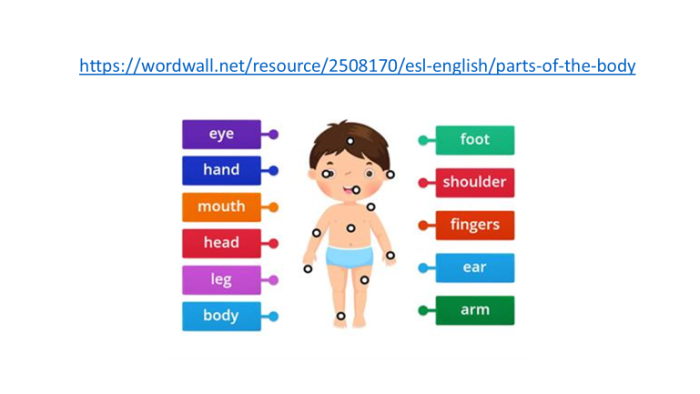
Task 1. Write down the words. Read and translate the words. Do the test.
Task 2. Listen the text about «Structure of the body. Body Systems».
Everyone is interested in the body and how it works. Anatomy studies the body structure. Physiology is the term for the study of how the body functions. These two sciences are closely related. They form the basis for all medical practice.
Any changes in the structure of the body or its functions are considered a disease and are studied as a science of pathology.
All living things are organized from very simple levels to more complex levels. Living matter begins with simple chemicals. These chemicals are formed into complex substances that make living cells - the basic units of all life. Specialized groups of cells form tissues, and tissues may function together as organs. Organs make up systems of organs, which maintain the body.
Task 3. Read and translate the text.
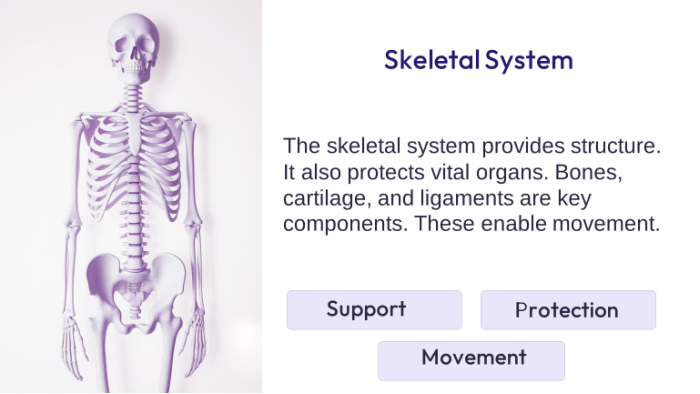
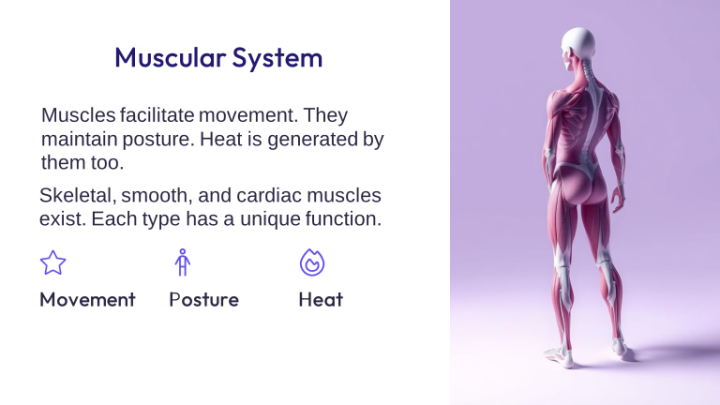
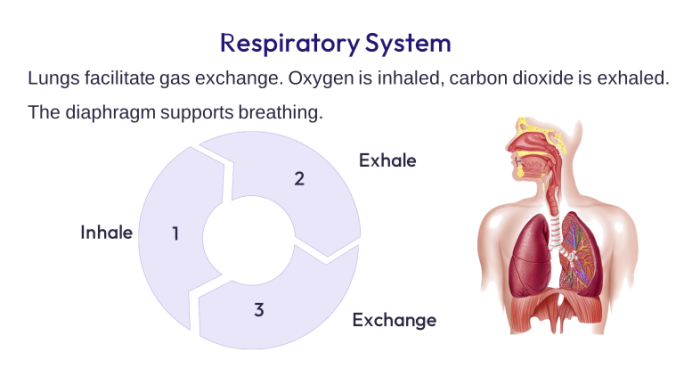
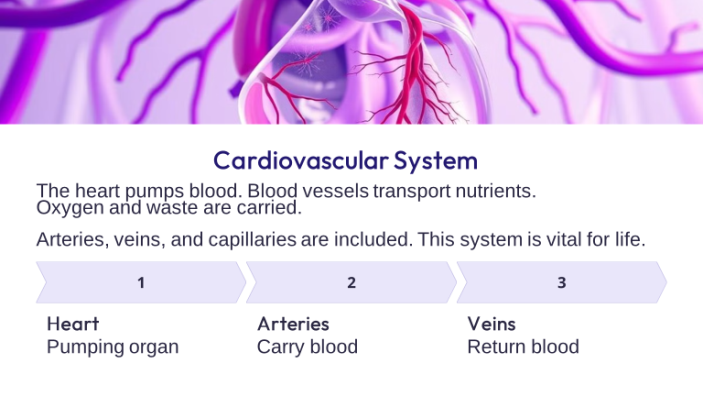
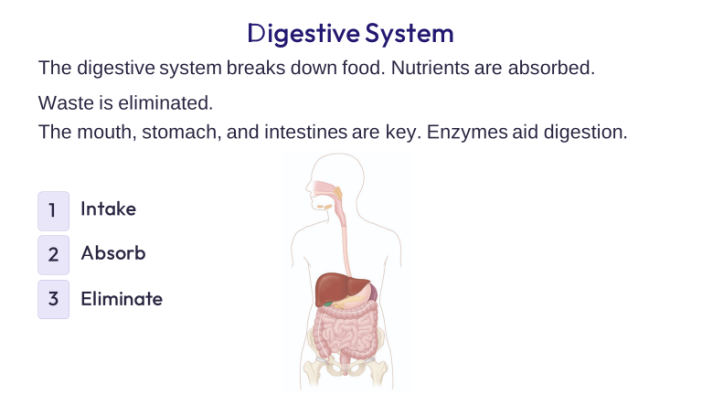
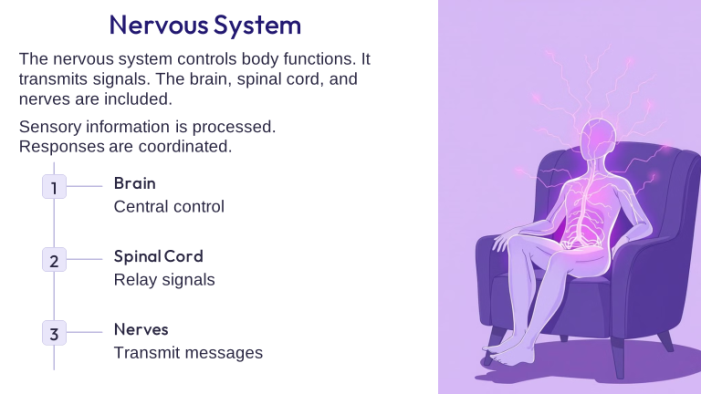
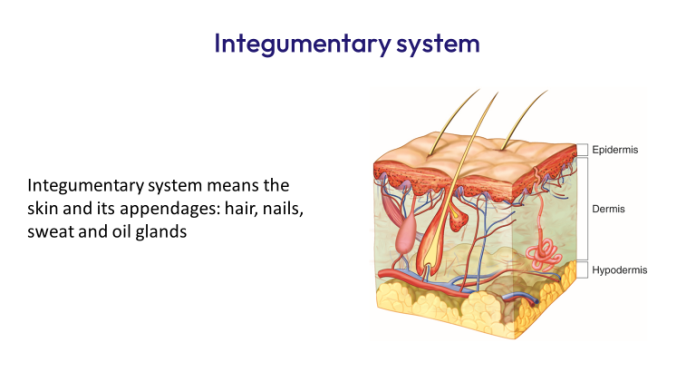
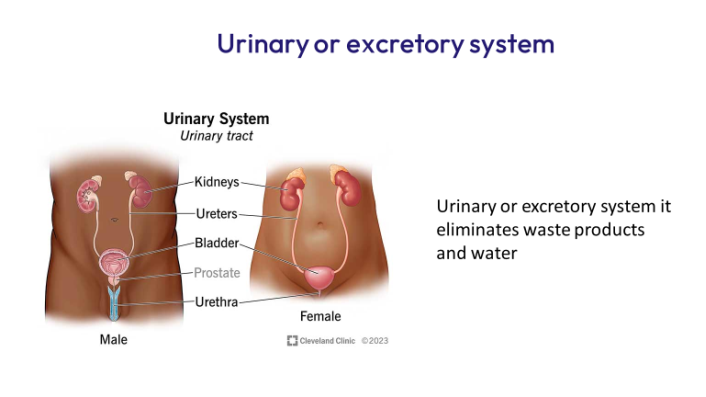
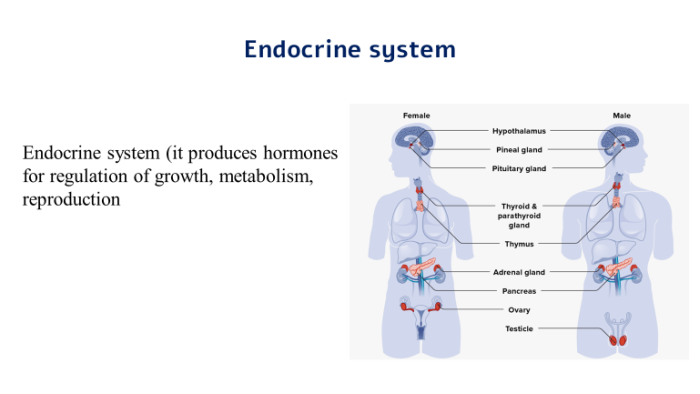
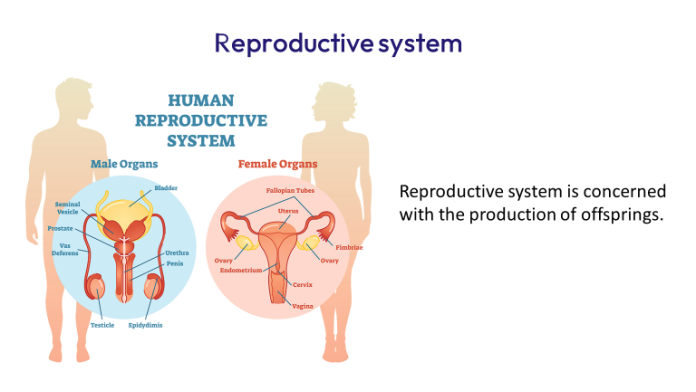
All the chemical reactions needed to sustain life we call metabolism. Metabolism can be divided into two types of activities: catabolism and anabolism.
Catabolism is the breakdown of complex substances into simpler ones. Anabolism is the building of body materials.
The energy obtained from the breakdown of nutrients is used to form a compound of the cell we call ATP (adenosine triphosphate).
There are many kinds of fluids in the organism. Extracellular fluids carry nutrient substances to and from the cell, bathe the cell, transport substances in and out of the cell. Intracellular fluid is in the cell.
Homeostasis is the steady state of the organism that maintains a state of balance within the body: body temperature, composition of body fluids, heart rate, respiration rate, blood pressure. Homeostasis is maintained by feedback. Any changes in the body balance lead to norm violation, this mechanism is described as negative feedback.
IV. Заключна частина.
Task 4. Are the sentences true or false?
1. Anatomy is the study of how the body functions.
2. Pathology is the science of diseases.
3. The smallest unit in the organism is the cell.
4. An organ is the unity of tissues that functions together.
5. Homeostasis is the balance in the organism.
6. Intracellular fluid carries nutrients to the cells.
Task 5. Answers to the following questions.
1. What are three studies of the human body?
2. What is the cell? Tissue? Organ? System? (Give the definitions.)
3. Can you name 10 systems of organs? What are they?
4. What is metabolism?
5. What is the difference between anabolism and catabolism?
6. What is ATP?
7. Can you give an example of homeostasis? How does homeostasis maintain?
8. What do we mean by “negative feedback”?
Task 6. Write 10 sentences with new vocabulary.
Home task:

 Зареєструватись за допомогою Google