
Розробка заняття з англійської мови (за професійним спрямуванням)
Про матеріал
Запропонована розробка заняття з англійської мови (за професійним спрямуванням) розрахована для студентів-медиків І-ІІ курсів медичного коледжу та учнів старших класів. Містить базову лексику, вправи на її закріплення. В ній представлені тексти медичного спрямування та підібрано післятекстові вправи. Запропоновані завдання для роботи з автентичними відеоматеріалами, роботи в групах та парах.Theme: Respiratory System
Level: Intermediate / Upper-Intermediate (B1–B2)
Target Audience: 1st–2nd year Medical College Students (Nursing)
Aims:
Educational and practical Aim: to develop students' English for Specific Purposes (ESP) communicative competence within the topic "The Respiratory System". Learn and practice specialized medical terminology (anatomical structures, processes, and disorders); improve reading comprehension, listening skills via authentic videos/3D models, and speaking skills.
Developmental Aim: to foster critical thinking, logical analysis, and data synthesis through interactive exercises (Wordwall, True/False facts, comparative disease analysis); to develop teamwork and problem-solving skills in professional contexts.
Upbringing Aim: to cultivate professional responsibility and medical ethics; to raise awareness about the importance of respiratory disease prevention and health promotion.
Equipment and resources:
Textbook :"English for Medical Students" (A.G. Sabluk, L.V. Levandovska, 2012);
Interactive 3D model: https://www.msdmanuals.com/home/multimedia/3dmodel/breathing-dynamics
Wordwall online task: https://wordwall.net/resource/9237869/respiratory-system
Authentic YouTube video materials: https://www.youtube.com/watch?v=PzfLDi-sL3w
https://www.youtube.com/watch?v=K_r-kMJjh8Y
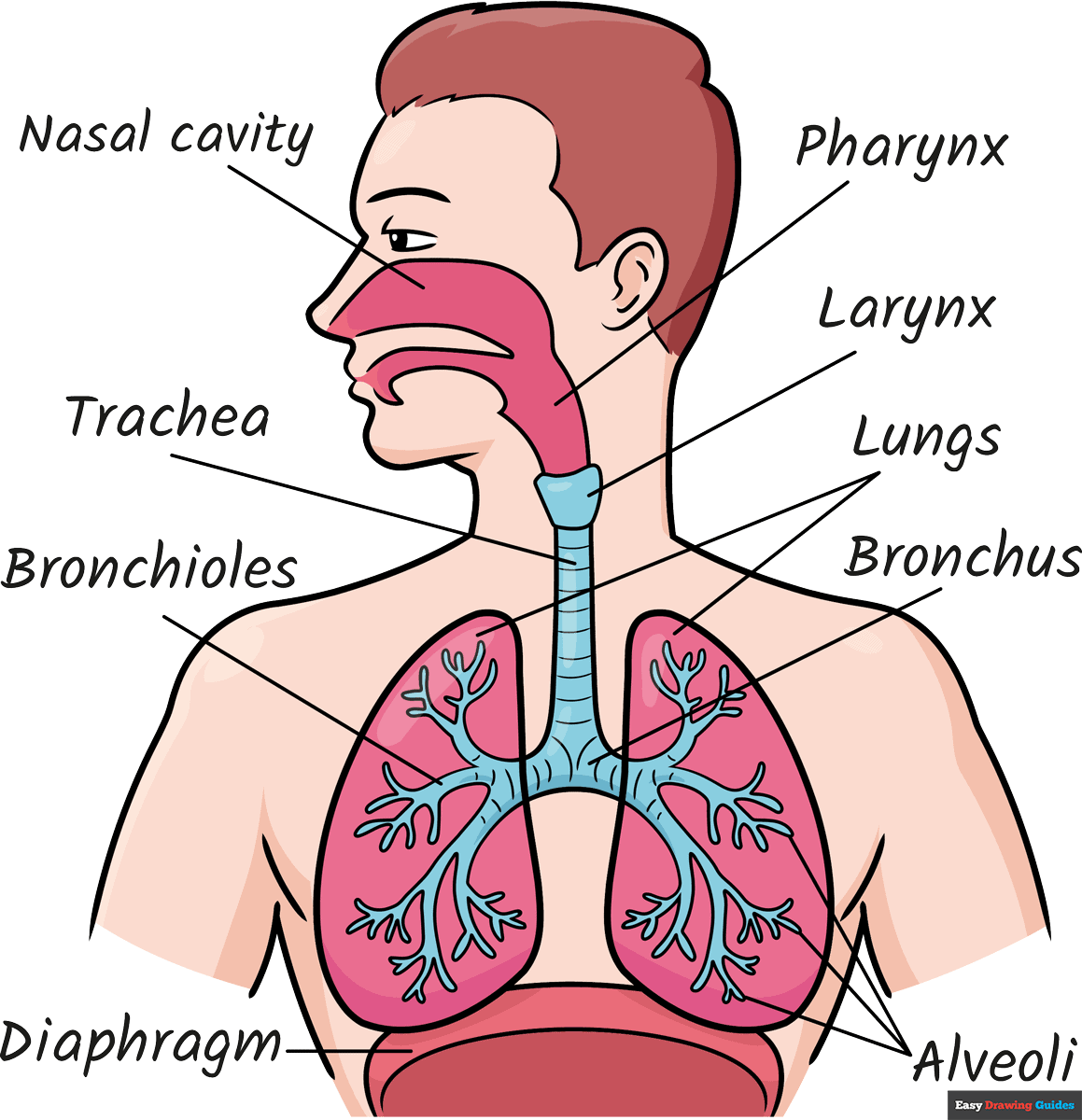
Respiratory System Structure (додаток 1)
I Greeting and Warm Up
Greeting
Good morning, class! Glad to see you all today. How are you doing? I hope you are ready for our lesson. Please, sit down and let's get started!
Warm Up
Look at this sentence on the board, please. Read it carefully and try to guess what body system this is: “This system helps us breathe. It brings oxygen into the body and removes carbon dioxide . The main organs of it are the lungs and the trachea.” So, class... What body system is this? (Respiratory System)
It will be the topic of our lesson today.
Let’s see, what do you know about it. Try to guess are the facts true or false:
Fact1: Your lungs are the exact same size — the left lung and the right lung are identical. (False - The left lung is slightly smaller and has a notch (cardiac notch) because the heart is located there. The left lung has two lobes, while the right has three)
Fact 2: If you spread out all the alveoli in your lungs, they would cover a full tennis court. (True - The surface area of the alveoli is enormous—approximately 70–100 m². This is necessary for efficient gas exchange)
Fact 3: Lungs are the only organs in the human body that can float on water. (True - Because a residual volume of air always remains in the alveoli, the lungs do not sink)
Fact 4: We lose about half a liter of water every day just by breathing. (True - Air is humidified in the nasal cavity, and during exhalation, we lose moisture in the form of water vapor)
Fact 5: Horses can breathe through both their mouth and their nose, just like humans. (Falls - They breathe exclusively through their noses)
II The Main Part
1 Vocabulary
Look at the scheme and name the main parts of Respiratory System. (Додаток 1)
Learn the vocabulary.
alveolus - [ælˈviː.ə.ləs] - альвеола
bronchiole - [ˈbrɒŋ.ki.əʊl] - бронхіола
bronchus - [ˈbrɒŋ.kəs] - бронх
diaphragm - [ˈdaɪ.ə.fræm] - діафрагма
larynx - [ˈlær.ɪŋks] - гортань
lung - [lʌŋ] - легеня
mediastinum - [ˌmiː.di.æˈstaɪ.nəm] - середостіння
pharynx - [ˈfær.ɪŋks] - глотка
pleura - [ˈplʊə.rə] - плевра
respiration - [ˌres.pɪˈreɪ.ʃən] - дихання
breathing - [ˈbriː.ðɪŋ] - дихання
trachea - [trəˈkiː.ə] - трахея
ventilation - [ˌven.tɪˈleɪ.ʃən] - вентиляція
nasal cavity - [ˈneɪ.zəl ˈkæv.ə.ti] - носова порожнина
inhalation - [ˌɪn.həˈleɪ.ʃən] - вдих
exhalation - [ˌeks.həˈleɪ.ʃən] - видих
lobe - [ləʊb] - частка
oxygen - [ˈɒk.sɪ.dʒən] - кисень
carbon dioxide - [ˈkɑː.bən daɪˈɒk.saɪd] - вуглекислий газ
bronchial tree - [ˈbrɒŋ.ki.əl triː] - бронхіальне дерево
Read the following word combinations and try to translate them.
To breathe with lungs; pulmonary ventilation; nasal cavities; vocal organ; air movement; gas exchanges; respiratory rates; diffusion of gases.
Переклад для самоперевірки:
to breathe with lungs — дихати легенями
pulmonary ventilation — легенева вентиляція
nasal cavities — носові порожнини
vocal organ — голосовий орган
air movement — рух повітря
gas exchanges — газообміни
respiratory rates — частота дихання (дихальні об'єми/показники)
diffusion of gases — дифузія газів
2.Working with a 3D Model - https://www.msdmanuals.com/home/multimedia/3dmodel/breathing-dynamics
1) Explore the 3D model of breathing dynamics:
2) Rotate the model, observe the breathing process, and name
the anatomical structures involved in inhalation and exhalation.
3. Reading.
1) Read and translate the text.
Respiration
Respiration is the process by which oxygen is obtained from the environment and transported to the cells, and carbon dioxide is exchanged from the cells.
Respiration includes three phases:
Pulmonary ventilation is normally accomplished by inspiration and expiration.
The diffusion of gases includes the passage of oxygen from air sacs into the blood and of carbon dioxide out of the blood.
The transport of oxygen and carbon dioxide by the circulating blood.
The respiratory system includes the nasal cavities, the pharynx, the larynx, the trachea, the bronchi and the lungs with their conducting tubes and air sacs. The nasal cavities filter, warm and moisten air, which we inhale. The pharynx (throat) carries air into the respiratory tract and food into the digestive tract. The larynx (voice organ) contains vocal cords. The trachea is the windpipe. The bronchi are the continuations of the trachea, they are two in number; they enter the lungs and then subdivide again and again making the bronchial tree. The smallest subdivisions of the bronchi are bronchioles. The lungs are covered with the membrane called pleura. The pleura not only encloses the lung but also lines the chest walls. Mediastinum is the space for the heart, great blood vessels, esophagus, trachea, and lymph nodes; it is located between the lungs. The lungs consist of lobes, which subdivide into lobules. The tiny air sacs in the lungs are called alveoli.
Physiology of respiration includes inhalation or inspiration (when air comes into the lungs), and exhalation or expiration (when air goes out of the lungs).
The respiratory control centers, located in the medulla and pons of the brain stem, regulate the process of respiration. Respiration is regulated so that the level of oxygen, carbon dioxide, and acid are kept within certain limits. The control centers regulate the rate, depth, and rhythm of respiration.
2) Post Reading Activities.
a) Interactive exercise.
Drag and drop the pins to their correct place on the image.
https://wordwall.net/resource/9237869/respiratory-system
b) Answer the questions:
- What does the term respiration mean?
- What do the respiratory organs consist of?
- What is each of them characterized by?
- What processes does physiology of respiration include?
- What regulates respiration?
- Where are the lungs located?
4. Working with video.
1) Watch the video - https://www.youtube.com/watch?v=nMvqeKDeBX0
2) Say are the sentences true or false:
a) Your lungs expand and fill with oxygen during the process of exhalation. (F)
b) The left lung is slightly smaller than the right lung because of the space occupied by the heart. (T)
c) The air humans breathe in is composed entirely of pure oxygen. (F)
d) Alveoli are tiny air sacs that facilitate the transport of oxygen into the bloodstream. (T)
e) Carbon dioxide is transferred from the blood into the alveoli to be released during exhalation. (T)
f) The average person breathes approximately 5 times per minute. (F)
g) Mucus in the respiratory tract is primarily used to dry out the air passages. (F)
h) Coughing and sneezing are considered involuntary malfunctions of the respiratory system. (F)
i) Oxygenated blood travels to the heart before being pumped to other organs and tissues. (T)
5. Group work
Watch the video for your group and complete the table below.
Group 1 (Asthma): https://www.youtube.com/watch?v=PzfLDi-sL3w
Group 2 (Pneumonia): https://www.youtube.com/watch?v=K_r-kMJjh8Y
Disease Aspect |
|
Definition |
|
Causes/ Triggers |
|
Key Symptoms |
|
Prevention and Treatment |
|
Dialogues
Work in pairs. Complete the dialogues using the prompt words, and act them.
shortness of breath, wheezing, cough, chest tightness, fever, inhaler, antibiotics, fluid buildup, rest and fluids |
№1
Doctor: Good morning! What’s trouble you?
Patient: Hello, Doctor. I’ve been having trouble breathing, especially when I exercise. I feel a lot of (1) _______________________ in my chest.
Doctor: I see. Do you have any (2) _______________________ or whistling sounds when you breathe out?
Patient: Yes, especially at night. And I have a dry (3) _______________________ that won't go away.
Doctor: Based on your symptoms, it sounds like an asthma flare-up. I will prescribe an (4) _______________________ to help relax your airways.
№2
Doctor: Hello! How can I help you?
Patient: Doctor, I feel terrible. I have a high (5) _______________________, chills, and a severe pain in my chest when I take a deep breath.
Doctor: How long have you had these symptoms?
Patient: For about three days. I also have severe (6) _______________________ and I am coughing up thick mucus.
Doctor: Let me listen to your lungs... I hear crackling sounds. This indicates a potential infection and (7) _______________________ in your alveoli, which points to pneumonia. I will prescribe a course of (8) _______________________ and you must get plenty of (9) _______________________.
III Reflection
«3-2-1»:
Say 3 new words
Say 2 facts about respiratory system
Ask 1 question if you still have one about the respiratory system
Feedback
Homework
Learn new vocabulary
Prepare a short report (5–7 sentences) on the prevention of respiratory diseases
Додаток 1
 Зареєструватись за допомогою Google