
Урок "George Byron" з теми "My Favourite Writer"

Тема уроку: George Byron
Очікувані результати:
Учні
- знають основні лексичні одиниці з теми та вживають їх в усному та писемному мовленні;
- сприймають та розуміють на слух повідомлення з теми;
- дають відповіді на запитання з теми;
- розширюють свої знання про культуру країни, мова якої вивчається.
Procedure
- Warm-up
Look around yourselves. Can you guess the topic of today’s lesson? We are going to speak about George Byron’s life and work. Do you like to read books? How often do you read books? Why do we read books? So well try to answer these questions.
- Reading. Find some information and answer the questions.
https://www.britannica.com/biography/Lord-Byron-poet Why is Lord Byron significant?
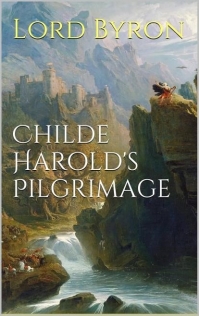
Lord Byron was a British Romantic poet and satirist whose poetry and personality captured the imagination of Europe. Although made famous by the autobiographical poem Childe Harold’s Pilgrimage (1812–18) - and his many love affairs - he is perhaps better known today for the satiric realism of Don Juan (1819–24).
What was Lord Byron’s early life like?
George Gordon Byron was born in 1788, the son of British Capt. John (“Mad Jack”) Byron and Catherine Gordon, a Scottish heiress. After John squandered most of her fortune, she and her son lived on a meagre income in Scotland. In 1789 George unexpectedly inherited the title and estates of his great-uncle.
What was Lord Byron like?
Although handsome, Lord Byron was born with a clubfoot that made him sensitive about his appearance all his life. However, this did not stop him from having numerous affairs with men and women, and his lovers allegedly included his half-sister. Adventurous, he frequently traveled, and he was unconventional; he had a pet bear at college.
How did Lord Byron die?
 Aiding the Greeks in their struggle for independence from Turkish rule, Lord Byron took command of a brigade of Souliot soldiers in early 1824. However, he was weakened by serious illness in February and contracted a fever in April, likely worsened by bloodletting, a then-common treatment. Byron died on April 19 at age 36.
3. Listening
Listen to the text and do the tasks
Byron is known in the whole world as a great romantic. He lived a short life (only 36 years), but his life was very bright, colourful, passionate and rich in events. He was born in a rather poor aristocratic family in 1788. Byron’s first years at school were unhappy as he was born lame. He wore special boots that made children laugh at him, and he suffered greatly. But soon the boys were under the charm of Byron because he was clever, bright, read and knew a lot. Later in Cambridge he began to write poetry and published his first book. Having taken his degree, he left the university. Byron travelled a lot. After the publication of his wonderful autobiography “Childe Harold’s Pilgrimage” Byron found himself famous. He took part in the struggle against the Turks in Greece and against the Austrian oppressors in Italy. In Greece he fell with fever and died in April, 1824.
Task 1. Answer the questions.
- Was his father's family poor?
- Were his school years happy? Why?
- When did Byron publish his first book?
- What poem made him famous?
- When did he die?
Task 2. Rut the words in a chronological order according to the events in the text
- Cambridge
- Romantic
- Greece
- “Childe Harold’s Pilgrimage”
- Unhappy
- The Turks
- Autobiography
Task 3. Fill in the gaps.
 This famous English poet was born in________. When the boy was ______he inherited the title of _________. The poet became famous in _______and _______in other countries when he published “Childe Harold’s _________. His last work was a______________“Don _____”. George Byron lived only to____________.
Now listen to the passage from the poem “Childe Harold’s Pilgrimage”.
https://www.youtube.com/watch?v=BvyHBkRCAz0 Adieu, Adieu! my native shore
 Fades o 'err the waters blue;
The night - winds sigh, the breakers road, And shrieks the wild sea - new. Yon sun that sets upon the sea
We follow in flight;
Farewell awhile to him and thee,
My native Land - Good Night!
A few short hours, and He will rise
To give the Morrow birth;
And I shall hail the main and skies, But now my mother Earth.
Deserted is my own good Hall,
Its hearth is desolate;
Will weeds are gathering on the wall; My Dog howls at the gate ...
... With thee, my bark. I swiftly go
Athwart the foaming brine;
Nor care what land thou bear 'St me to, So not again to mine.
Welcome, welcome ye dark - blue waves!
And when you fail my sight, Welcome, ye deserts, and ye caves!
My native Land - Good Night!
4. Speaking
Tell what you know about George Byron. Use the following word - combinations:
|
|
|
6. Summary. Speaking “The most confusing (or clearest) moment?
- What is the most confusing moment of today’s lesson?
- What is the clearest moment?
7. Home assignment:
*make a presentation about George Byron; *learn one of the Byron's poems by heart:
* try to translate one of the Byron's poems.


про публікацію авторської розробки
Додати розробку